The end of a project is the worst-managed part of agency work. Everyone is tired, the scope is spent, and the last deliverable is usually a link to a staging URL and a Slack message saying it is live.
The client then has a website and nothing to do with it. No images to announce it. No screens for their deck. Nothing for the pitch they have next month.
This is a genuinely large missed opportunity, because the marginal cost of those things is now almost zero — you have the site, you have the brand, and you have about an hour.
What clients actually need after launch
Ask a client six weeks after a launch what they wish they had, and it is almost always the same short list.
- Images of their own site for LinkedIn, a newsletter, an investor
- update, a conference slide.
- Screens for a sales deck, because the sales team's deck still shows the
- old site.
- Something for the careers page or an About section that shows the
- product looking real.
- A mobile view, because they will be asked "is it responsive" and want
- to answer with a picture.
None of that is in a typical handoff. All of it is an hour of work at the point where you already have everything.
A handoff pack that takes an hour
Here is a list that fits in one folder and covers most of what gets asked for later.
Hero images, three shapes. The homepage on a browser frame, exported at LinkedIn's 1200 × 627, a 1080 × 1080 square, and a 1920 × 1080 slide size. Same composition, three destinations. These are the three places a client will need to put their site in the next month.
A key-screens set. Five or six pages — home, the main product or service page, a case study or listing, contact — all on the same background, same frame, same light. This is the set that goes in their deck.
One mobile shot. The homepage in a phone frame. Captured at phone width, not a desktop page squeezed into a phone — that distinction matters and clients notice it.
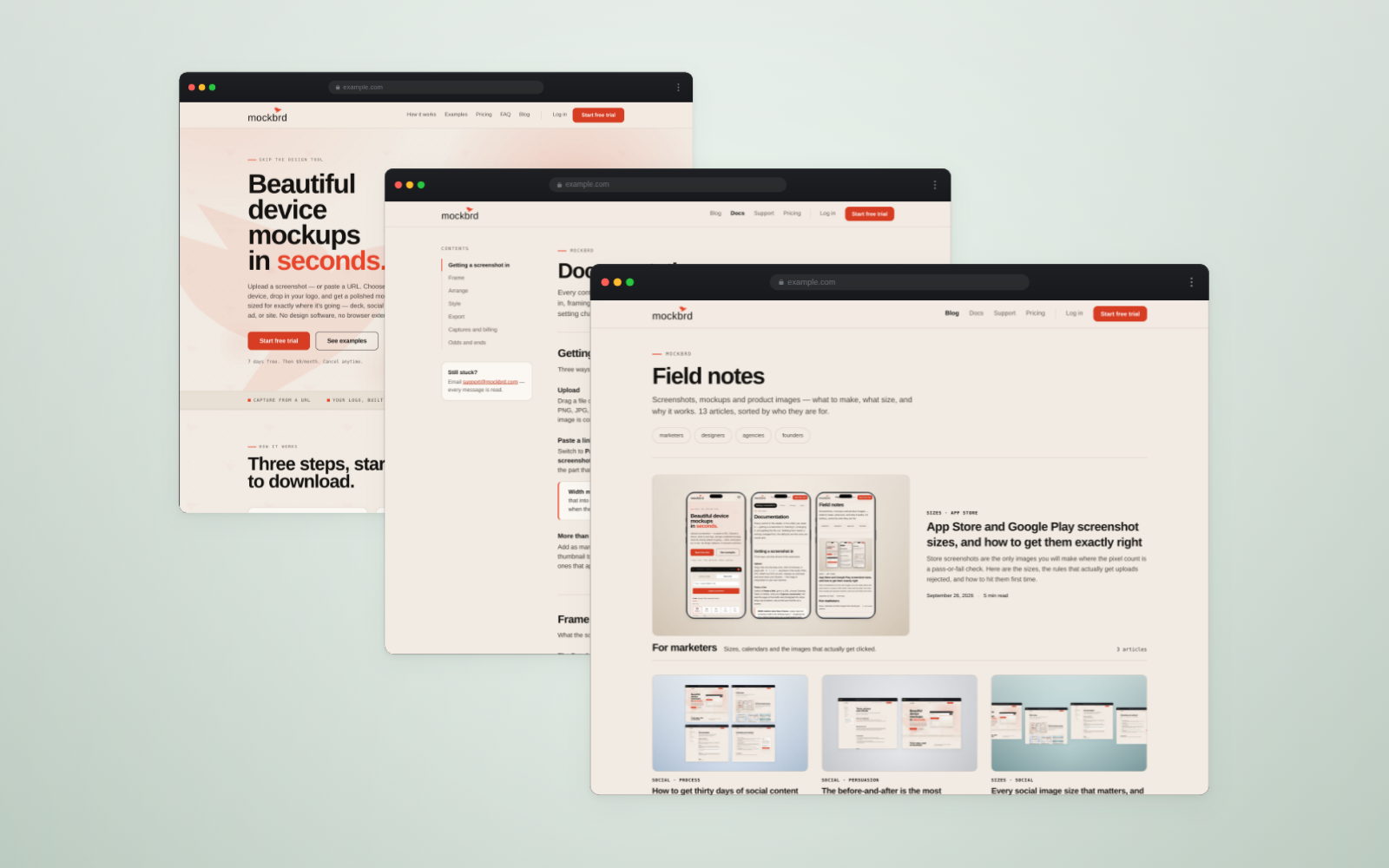
One "scope" image. Six to nine screens arranged as a grid or a wall. This is the picture that says "we built a site", and it is the one that ends up in your portfolio as well as theirs.
A short read-me. Half a page: where the files are, what size each one is, what it is for. The difference between a folder and a deliverable is a page telling someone what is in it.
Why this is worth an unbilled hour
Three reasons, in order of how much they are worth.
It is the referral mechanism. A client who posts an image of their new site is advertising your work to their network, with attribution, at a moment when they are pleased with you. No outbound you run will beat that, and it only happens if the image exists.
It extends the relationship past the invoice. The handoff pack creates a reason to be in touch in month two — "here are the images, let us know if you need other sizes" — which is the cheapest warm re-open available.
It is your own portfolio, made early. You will want these images eventually. Making them while the work is fresh and the staging site is up is far easier than making them in nine months when the client has changed the copy.
Build it once, then it is a template
The reason this does not happen is that it feels like a new project. It is not, after the first time.
Set up one treatment — ground, frame, light — that suits the client's brand. Run every screen through it. Export each to the three or four destinations. The decisions happen once per project; everything after is throughput.
For the next client, the only thing that changes is the background color and the screenshots. The structure of the pack, the sizes, the read-me — all of it carries over.
What to leave out
Restraint matters here, because an overstuffed handoff is as unhelpful as an empty one.
- Not every page. Six good screens, not thirty-one.
- No source files unless it is in the contract. This is a deliverable,
- not an asset transfer, and confusing the two creates a conversation about
- ownership you did not plan for.
- No annotations. Clean images. The annotated versions belong in the
- presentation, not in the folder they will pull from for the next two
- years.
The last week of a project is the only week where the client is both happy with you and about to tell people about it. What you hand them in that week is marketing.
The underlying idea
You already made the thing. Spending one more hour turning it into images the client can actually use is the highest-return hour in the whole engagement — for their launch, for your referrals, and for the portfolio piece you will otherwise write in a hurry next year.